The definition of early childhood education and it's significance
What is Early Childhood Education?
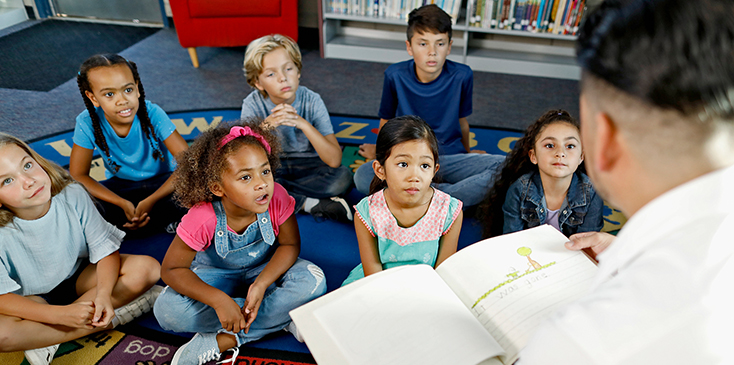
Learning does not start at kindergarten. From birth, children are exploring, experiencing, and learning from the world around them in a variety of way. The process of shaping this time of rapid development in a formal setting is known as early childhood education.
What is Early Childhood Education?
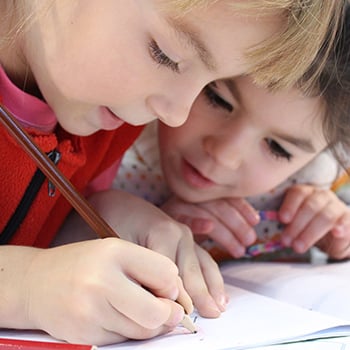
Early childhood education is the branch of academia that involves teaching children from birth to approximately eight years old. The focus is largely on preparing students for a lifetime of learning, which involves the development of their social, emotional, cognitive and physical needs, according to the United Nations Educational, Scientific, and Cultural Organization (UNESCO).
“At these early levels, educators are trying to encourage learning through natural context,” says Donna Elder, Ed.D, Interim Dean of National University’s Sanford College of Education. “You want children to explore the world through conversations, reading, play, and other ways that they would naturally learn from in a family environment. You ultimately want to create a space where children have a lot of opportunities to talk with each other and experience new things.”
Important topics in the field include learning and brain development, peer cooperation and collaboration, early cognition, and emerging literacy.
Benefits of early childhood education
High quality early childhood education and care gives children the best start in life. It provides important opportunities to learn and develop. Early childhood education and care can help your child make friends, develop independence and learn new routines. It also supports their transition to school.
Helping brain development in young children
Children's brains are influenced by both their genes and their environment. Babies are born ready to learn, with more than one million neural connections forming every second during the first few years of life. The early years are important, as how the brain grows is strongly influenced by what's happening in a child's environment and their interactions with the people around them.
Vision and hearing pathways develop first, followed by early language skills and higher cognitive functions. A child's vocabulary often quadruples between ages two and four. These connections become more complex over time as children grow, and influence brain development to create positive learning behaviours from an early age.
Research shows that children who participate in quality preschool programs are more likely to arrive at school equipped with the social, cognitive and emotional skills they need to help them to continue learning. These benefits extend well beyond primary school. Higher levels of educational success, employment and social skills have all been linked to moderate levels of participation in quality early childhood education.
Making friends
From the ages of three to five, most children want to play with others their age, and can think about the feelings of others at an initial level. At this age, children learn how to play with others, and might have a ‘best friend’.
In early childhood education and care, children are encouraged to share and play with their peers. Through these interactions they learn to develop important interpersonal qualities such as empathy and cooperation which will help them get along with others in preschool and beyond.
By spending time with their peers, children learn to include ideas from others in their play and start to understand each other’s feelings. Young children are naturally egocentric, so learning skills such as empathy can be challenging, but the good news is they can learn a lot from watching and interacting with their peers. These early years social skills can help your child develop friendships throughout their whole life.
Developing independence
For many children, participating in early childhood education and care is the first significant amount of time they spend away from their family. Being in a new environment, away from home, can help children to build their confidence and discover their identity.
As part of a child’s growing independence, they develop key self-regulation skills between the ages of three and five years old. These skills may include concentrating, sharing and taking turns. For example, toddlers may show self-regulation by waiting to play with a toy, or by paying attention to someone who is talking to them.
Self-regulation skills are important to help children develop confidence and independence, allowing them to grow and understand who they are, and to form friendships. Parents, carers and early childhood educators are all important role models for demonstrating healthy methods of self-regulation.
Learning new routines
By attending early education and care, your child can learn to adapt to a new routine outside the home. Routines can positively influence a child’s emotional and cognitive development and knowing what to expect encourages them to feel secure and comfortable.
Routines can help children manage their expectations of their environment, and reduce problematic behaviours such as temper tantrums. When developing daily routines, early childhood teachers and educators will consider a mix of activities that are active/passive, indoor/outdoor, and child-directed/adult-directed.
Routines are also planned according to children’s ages to make time for naps, incorporate any individual requirements or medical needs, and to accommodate their attention spans and other aged-based needs.
Supporting transition to school
Early childhood education supports your child’s transition to primary school. It prepares children in both informal and formal ways, such as engaging in a range of Transition to School activities. Children who experience a positive transition to school are more likely to feel comfortable, relaxed and motivated to learn. This helps them form positive relationships with others, both children and educators, and develop a sense of belonging within the school.

Comments
Post a Comment